


Middleware connects the software systems your business already runs, enabling them to share data and automate workflows without replacing anything. For businesses juggling legacy ERP platforms alongside modern SaaS tools, middleware eliminates data silos, reduces manual errors, and delivers real-time operational insight, all while protecting your existing technology investment.
Streamlining Data and Processes
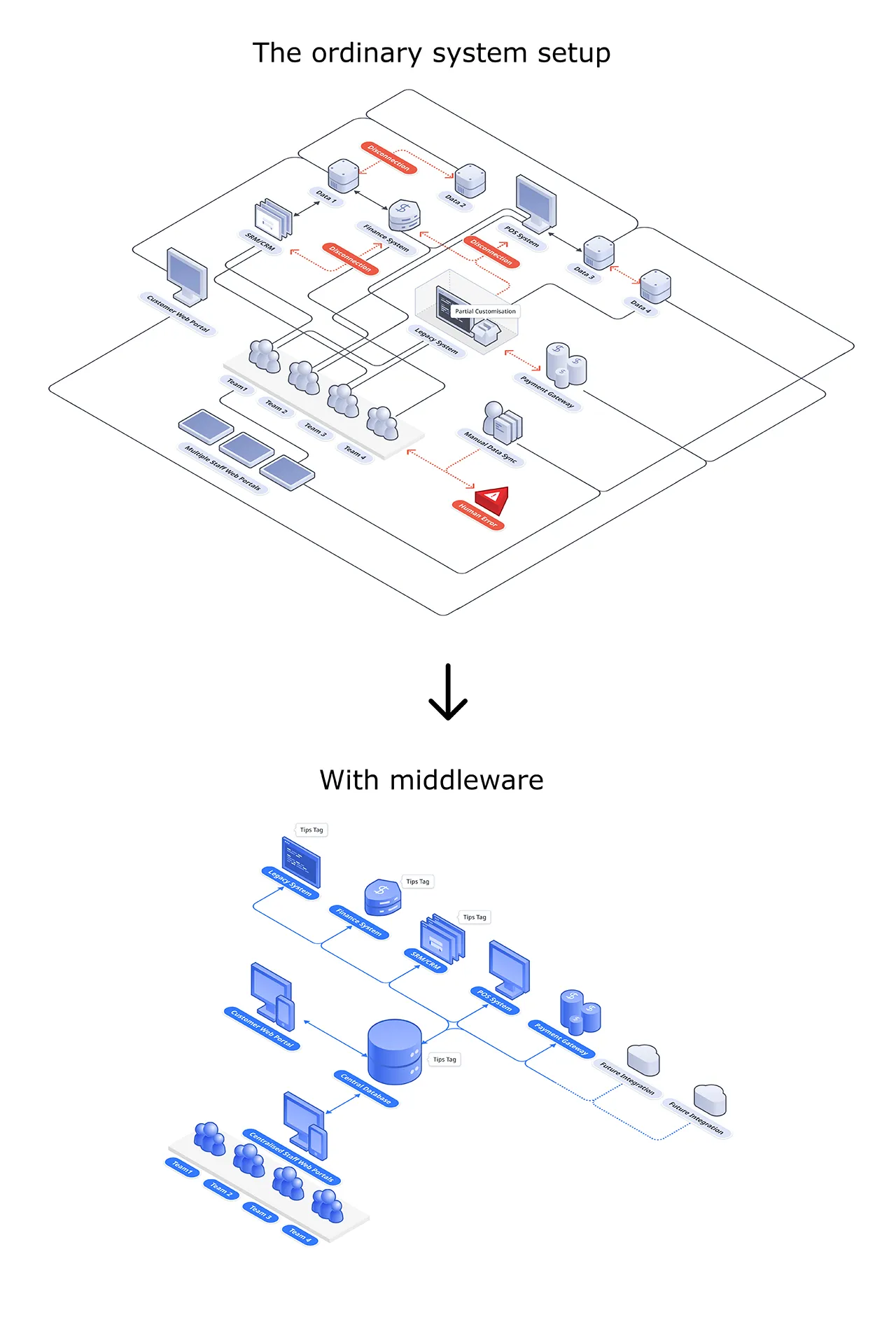
One of the key challenges businesses encounter is data fragmentation, where information is scattered across various systems and departments. This can result in duplicated efforts, inaccuracies, and missed opportunities. Middleware solutions offer centralised data management, joining systems up and eliminating data silos. By consolidating data from multiple systems into a unified platform, businesses can enhance data accuracy, streamline processes, and improve overall operational efficiency.
Efficient System Integration
As businesses grow, they often adopt multiple software applications and tools to meet their evolving needs. However, integrating these disparate systems can be a complex task. Middleware solutions act as a bridge, facilitating smooth communication and data exchange between different systems. That gives businesses one connected technology stack rather than a set of islands. With middleware solutions, organisations can eliminate bottlenecks, reduce errors, and enhance overall system performance.
Automating Manual Processes
Manual and time-consuming processes can interfere with productivity and hinder business growth. Middleware solutions offer automation capabilities that identify and automate repetitive tasks, freeing up valuable time and resources. By automating routine processes, businesses can improve efficiency, reduce human errors, and allocate resources to more strategic initiatives. This leads to increased productivity, cost savings, and faster response times.
Real-time Insights for Informed Decision Making
Real-time insights are crucial for making informed business decisions in today's competitive landscape. Middleware solutions provide real-time data and analytics access, so organisations can monitor critical metrics, identify trends, and respond swiftly to market changes. With timely and accurate information, businesses can make strategic decisions, capitalise on opportunities, and stay ahead of the competition.
Integration and Future-Proofing
Investing in new systems or technologies can be a significant decision for any organisation. Middleware solutions connect existing systems to new ones without a rebuild. By enabling compatibility and smooth data exchange, middleware solutions future-proof businesses, allowing them to adapt and scale without disruption. This flexibility is essential in today's rapidly evolving business landscape.
What to Do Next
Middleware solutions offer practical and effective ways to optimise business efficiency by streamlining data and processes, facilitating system integration, automating manual tasks, and providing real-time insights for informed decision-making. By embracing middleware solutions, organisations can overcome common challenges, enhance operational efficiency, and position themselves for sustainable growth.
Ready to explore what middleware could do for your business? Learn more about our systems integration services or get in touch.