

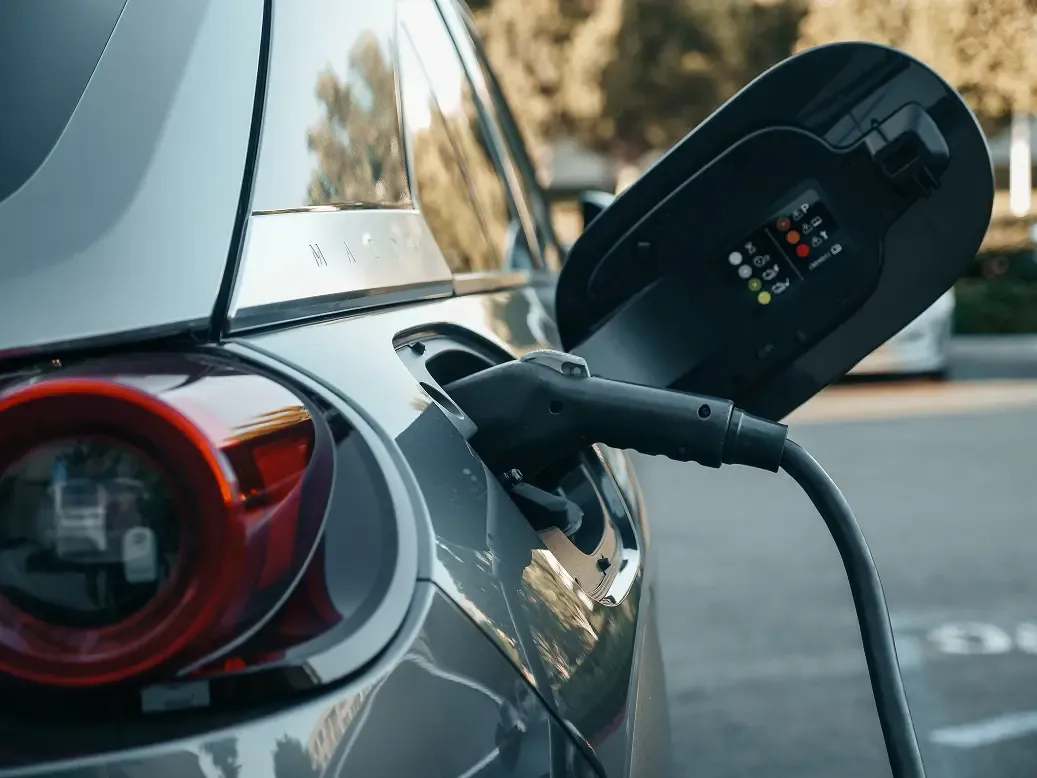
Building an EV charging app means solving three hard problems at once: real-time IoT integration with charging hardware, OCPP protocol communication across manufacturers, and a payment and billing system that handles intermittent connectivity. Get these right and you have a product that runs a charging network; get them wrong and you have stranded drivers and angry operators.
Why Do Charge Point Operators Need a Dedicated App?
Electric vehicle charging infrastructure is expanding globally, yet drivers consistently struggle to locate available stations. For charge point operators managing entire EV networks, a dedicated mobile application delivers measurable operational and business value.
According to JD Power research, "41% of EV owners use their brand's EV mobile app on most of their trips." Operators gain critical insights including charging station performance, daily revenue, power consumption data, driver demographics, transaction records, and user feedback.
Current infrastructure includes approximately 96,536 public charging points across the USA (as of December 2020), while New Zealand has 327 charging points nationally. With EV numbers projected to increase 90% over five years, demand for charging network management solutions continues accelerating.
How Does an EV Charging App Work?
Users register via phone, email, password, or social media accounts. After registration, they activate geolocation or manually enter a location to discover nearby charging stations. The app displays station compatibility, photos, pricing details, and availability status.
Users can reserve charging slots, track charging progress in real-time, and view payment amounts either at the station or through the app interface.
What Features Should an EV Charging App Include?
A production-ready EV charging application typically covers these capabilities:
- Register: Email, phone number, password, or social media sign-in options
- User Profile: Editable profiles displaying photos, vehicle details, and personal information
- Nearby Charging Station Discovery: Automated display of accessible stations based on location
- Geolocation: Real-time location access with manual address search fallback
- Filters: Advanced search filters enabling customised station discovery by connector type, speed, and availability
- Station Details: Comprehensive facility and service information for each location
- Booking Slots: Pre-arrival reservation functionality to guarantee a charging bay
- Ratings and Reviews: User experience ratings and detailed service feedback
- Payment Options: Multiple payment methods including credit cards, PayPal, and e-wallets
- Billing History: Daily, weekly, and monthly spending tracking with energy consumption details
- Push Notifications: Alerts for nearby stations, upcoming bookings, and promotional offers
- Real-time Chat Support: AI-powered chatbots providing immediate assistance with human escalation
- EV Travel Planner: Multi-stop trip planning with charging waypoints
- In-app Navigation: Map-based station discovery with turn-by-turn directions
- Loyalty Rewards: Vouchers, coupons, and membership benefits to drive repeat use
Why Is the Investment Case So Strong?
The global EV charging infrastructure market is projected to expand at a combined annual growth rate of 46.6% from 2020 to 2027, growing from 2,115,000 to 30,758,000 units. This growth is driven by two forces: consumer demand for carbon-free transportation and government green vehicle initiatives including subsidies and tax incentives.
For entrepreneurs and operators, this trajectory creates substantial first-mover advantage. Networks that establish strong app experiences and loyalty programmes now will be far harder to displace as the market matures.
How Much Does It Cost to Develop an EV Charging App?
Development costs depend on scope, features, platform selection (Android, iOS, or both), and application complexity.
- Basic user-facing app (station finder, payments, session monitoring): approximately $80,000 to $150,000 NZD
- Full network management platform (operator dashboard, billing systems, hardware integration, multi-user): $300,000 to $600,000+ NZD
- US market range: $10,000 to $400,000 USD depending on scope
Outsourcing to an established overseas development firm often proves more cost-effective than domestic options, though for OCPP-specific work the specialist knowledge pool matters more than geography. Putti provides detailed scoping and fixed-price proposals for EV charging projects.
What Makes EV Charging App Development Technically Distinct?
EV charging applications present complexity well beyond a standard mobile app:
- OCPP protocol expertise: OCPP (Open Charge Point Protocol) is the standard communication layer between charging stations and management software. Without specialists, cross-manufacturer hardware reliability suffers.
- Real-time IoT integration: Hardware status must update live. Polling intervals, websocket connections, and graceful failure modes require careful architecture.
- Intermittent connectivity handling: Charging stations are often in car parks and basements with poor signal. The app must queue transactions and recover cleanly.
- Payment and billing accuracy: Energy billing is regulated and must be accurate to the kWh. Errors erode trust quickly.
Putti has delivered EV charging applications including IU Charging and Hikotron in New Zealand, building on this specialist capability across IoT, real-time data systems, and payment processing.
Ready to scope your EV charging platform? Contact us to discuss your network requirements.