
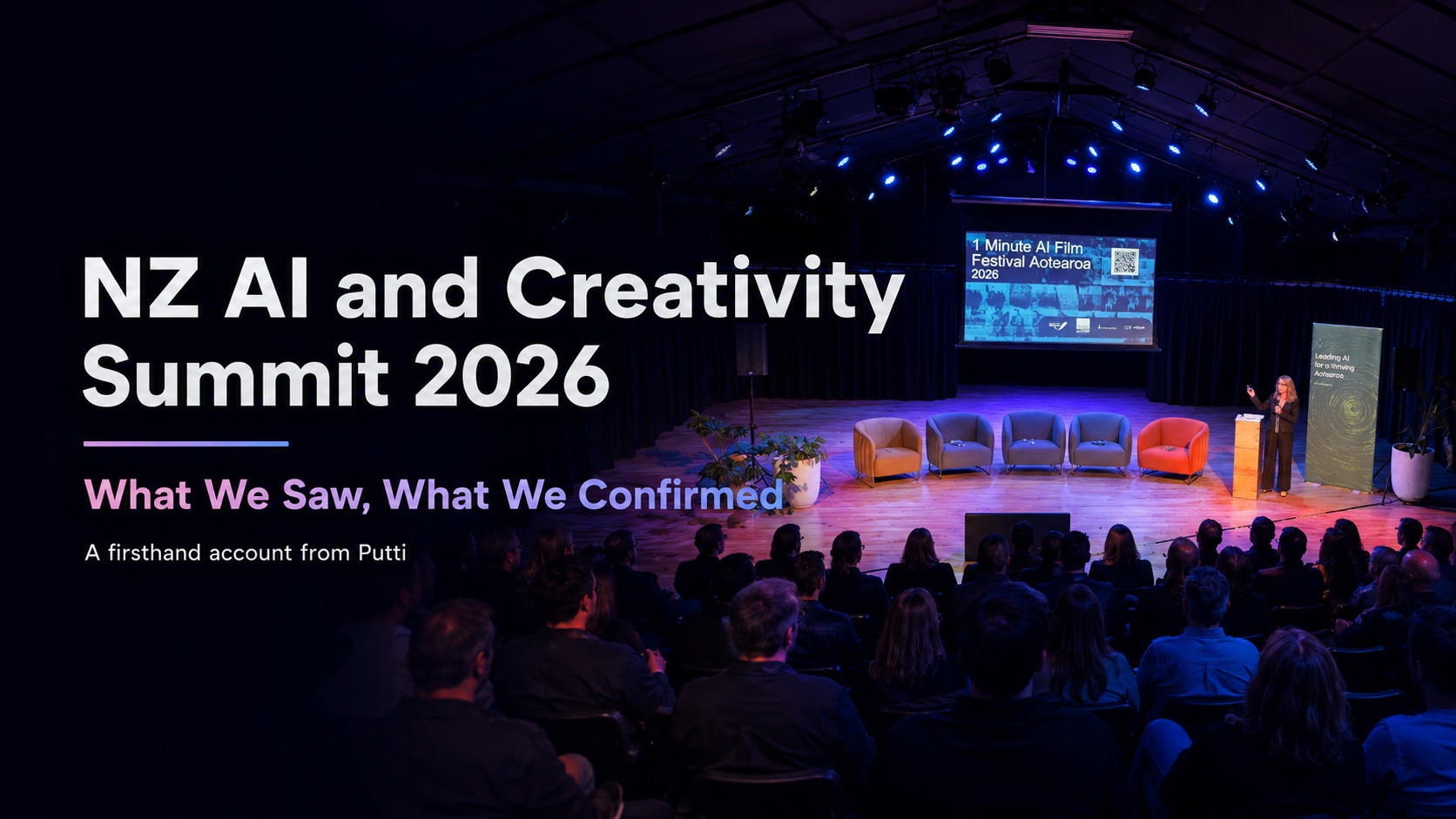
A firsthand account from Putti, attended with CEO Bruce Howe
This month, Putti CEO Bruce Howe and I headed along to the NZ AI and Creativity Summit 2026. These kinds of events can start to feel formulaic: big claims about AI changing everything, polished slides, and then you walk out wondering what you’re actually supposed to do differently on Monday morning. This one was different.
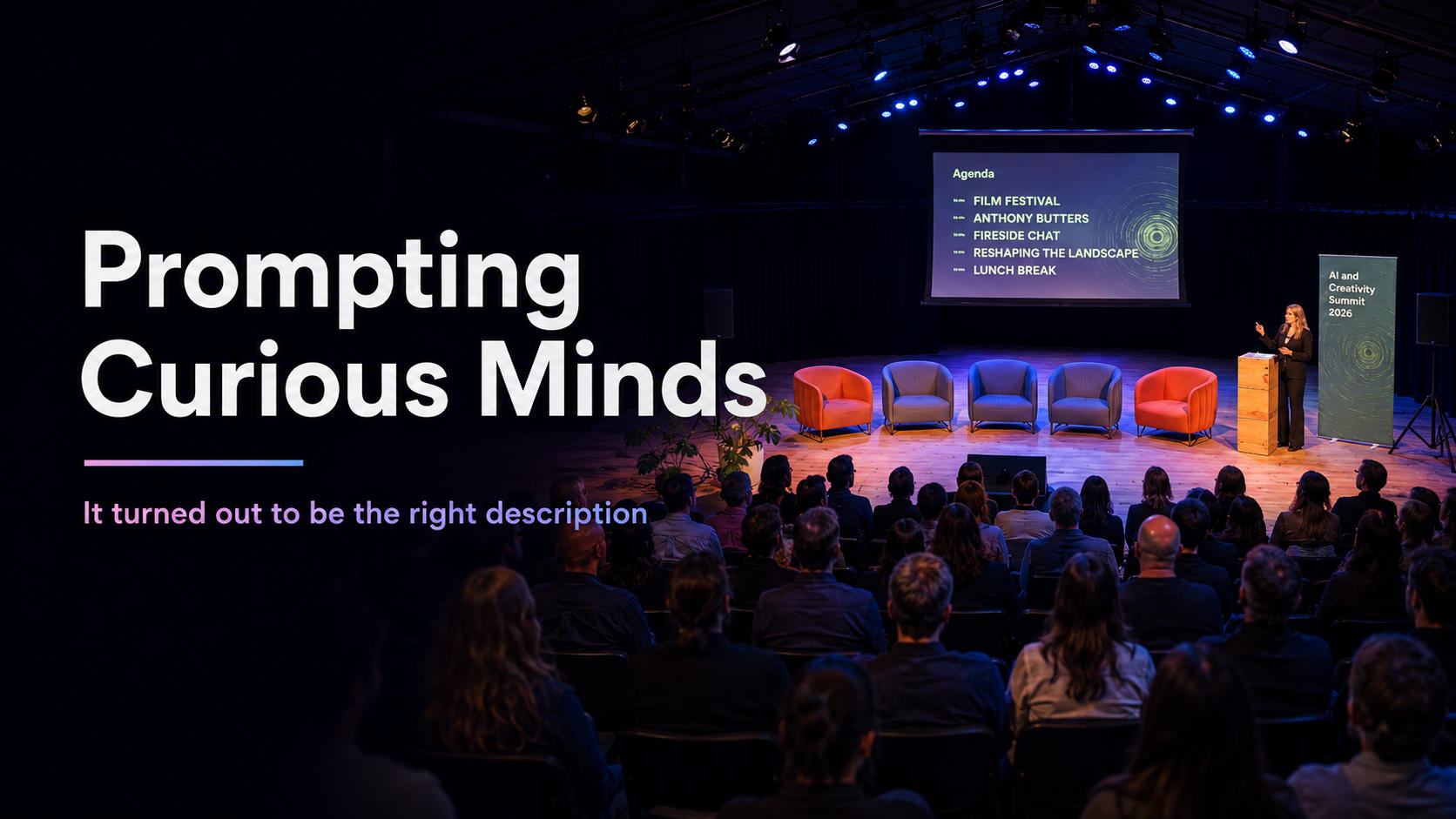
BBC’s Laura Ellis (Head of Technology Forecasting) held the day together, joined by miso.ai CEO Lucky Gunasekara, TVNZ’s Carol Hirschfeld, Stuff’s Joanna Norris, and NZME’s Andy Fyres: essentially the people at the centre of New Zealand’s media and creative industries. Add in NZ Geographic publisher James Frankham, Project Origin’s Bruce McCormack, and Kōawa Studios’ Arthur Machado, and you had a room that represented some of the most serious AI thinking happening in this country right now.
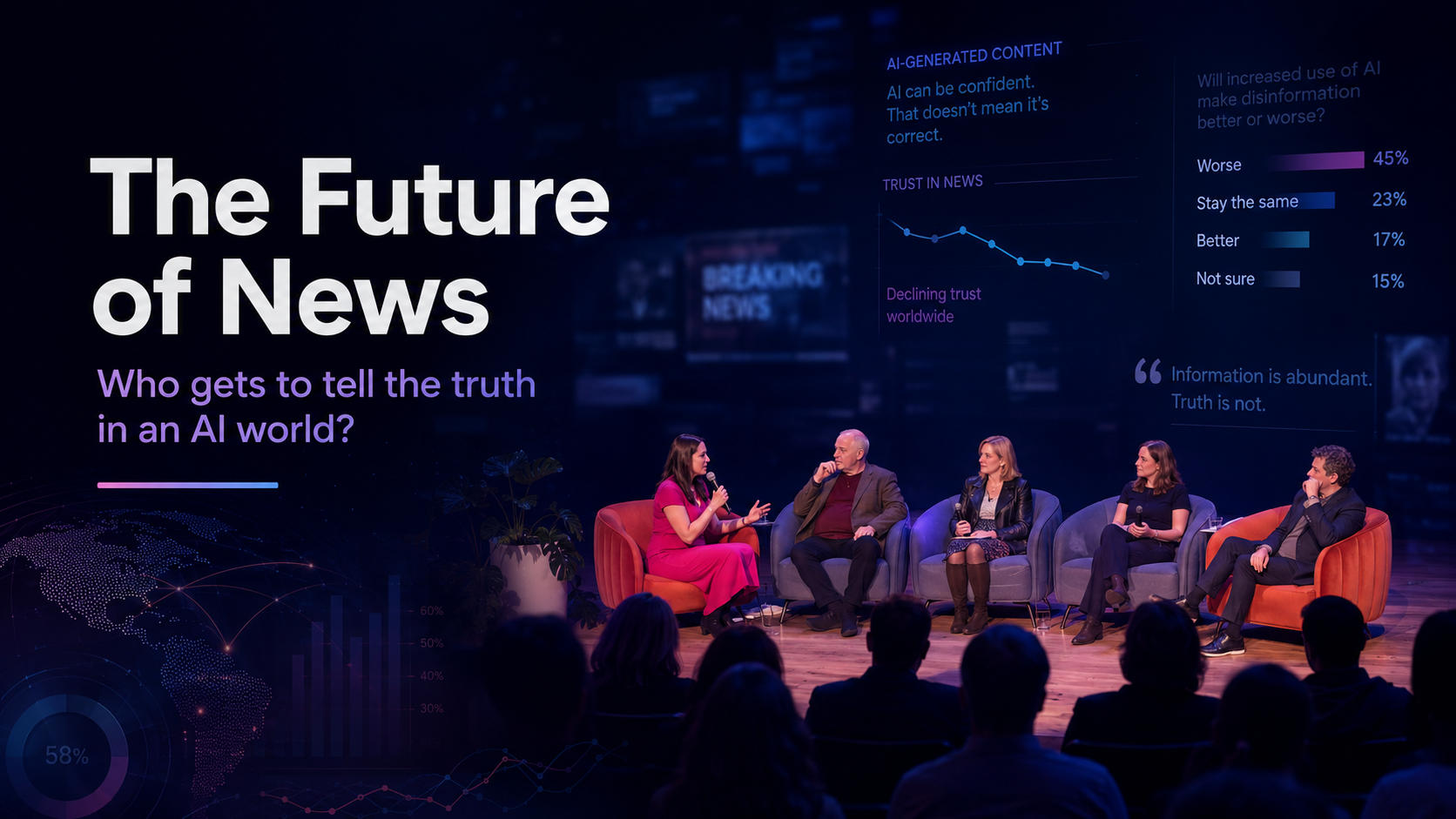
The morning centred on “The Future of News”: how AI is reshaping journalism, and what it takes to protect trustworthy information in an era of deepfakes and synthetic content.
The data shared was striking. When asked whether increased AI use would make disinformation better or worse, only 17% of New Zealanders said better. 53% said worse. The gap between Anglosphere countries and Asian markets was equally telling. China and India skew optimistic about AI, while New Zealand sits in a zone of being simultaneously excited and nervous.
This confirmed exactly what we see working with clients every day. The tension between wanting to move fast on AI and genuinely not knowing whether it’s safe to do so is real, it’s widespread, and it’s not going away. What came through clearly is that the productive response isn’t to dismiss that anxiety. It’s to take it seriously enough to work through it properly.
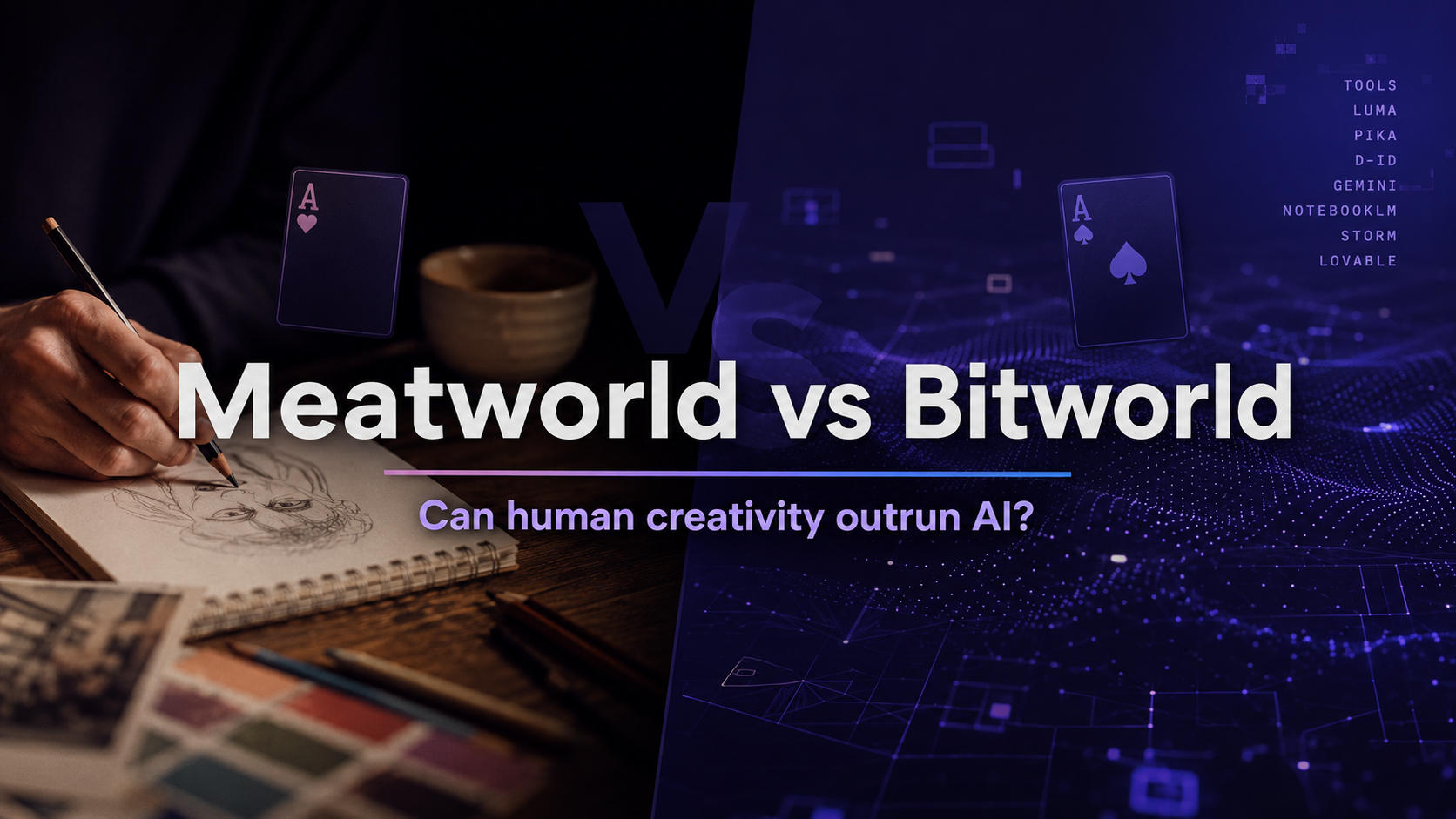
One of the most distinctive sessions of the day was the interactive card game run by Andy Blood (Media Design School). “Meatworld vs Bitworld” explored where human creativity and AI creativity each hold an advantage, using a deck of cards designed to provoke genuine conversation rather than easy answers.
A few statements stayed with us. Demis Hassabis, Nobel Laureate behind AlphaFold, was unequivocal: creativity and invention remain capabilities AI doesn’t yet have. Creativity requires good conjecture, and AI hasn’t got there. Sam Altman took the opposite view: “A child born today will never know as much as any AI ever.” Yann LeCun pushed back: “A four-year-old has processed 450 times more sensory information about the physical world than an AI ever will.”
There was also a point that landed clearly: there is zero correlation between creativity and intelligence. Spending billions to make machines smarter doesn’t make them more creative. On the topic of humour, the room got quiet. Humour is the one human capacity that correlates with both creativity and intelligence simultaneously. Roman Yampolsky put it plainly: “The funniest AI joke will not be funny until it is. And then watch out.”
Roboticist Michelle Dickinson was equally sharp: “Age plus AI can be a superpower. Youth plus AI can be a liability.” She mentioned considering home-schooling her four-year-old twins to allow critical thinking to develop before AI exposure takes hold. Cars were invented decades before driver licensing. Social media existed for twenty years before meaningful guardrails for children appeared. AI may follow the same pattern.
And one video screened during the session got a genuine reaction from the room. Footage that looked AI-generated turned out to be made entirely in-camera through human craft. No AI involved. The point landed: human craftsmanship is becoming a new kind of luxury.
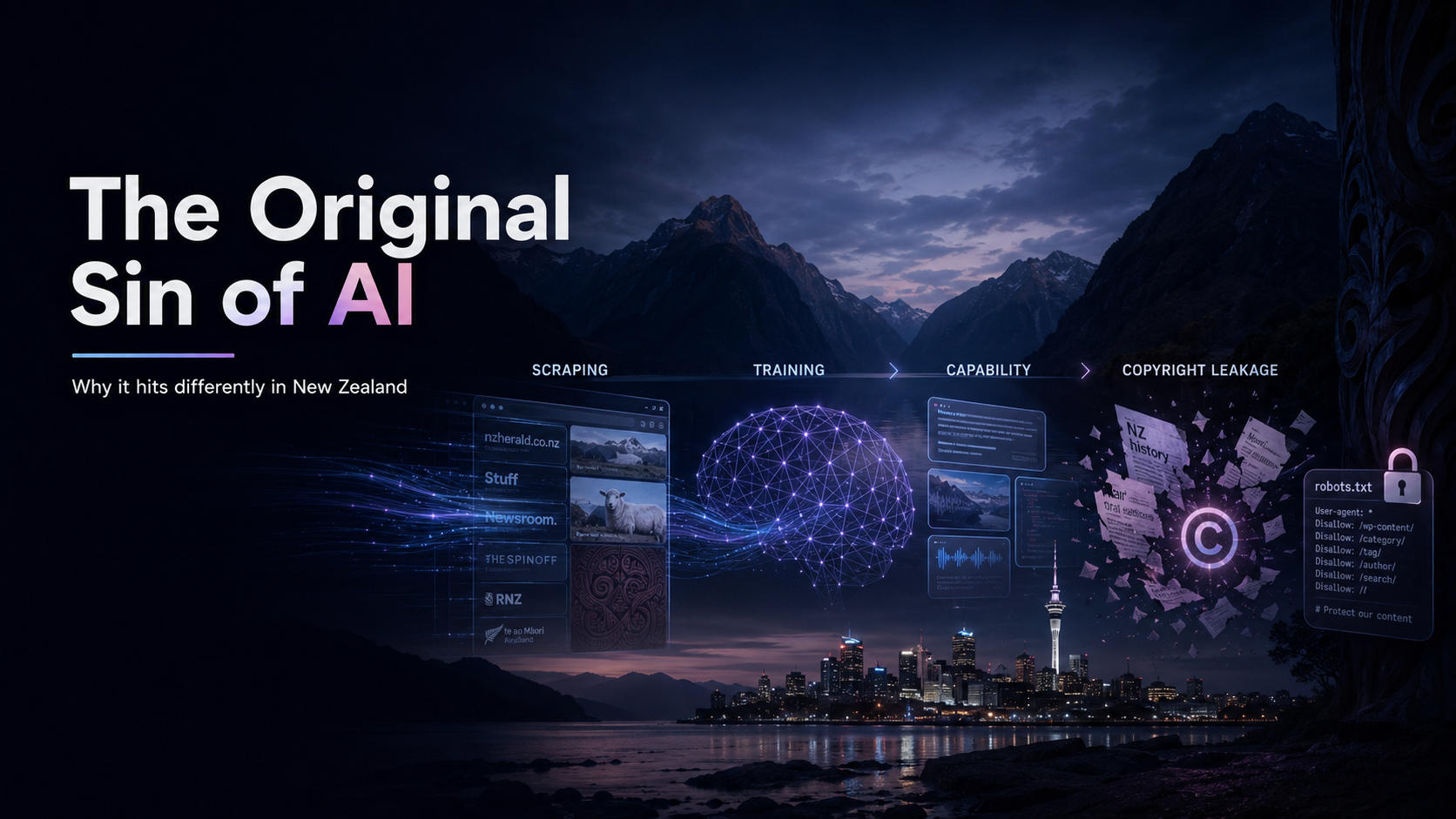
James Frankham’s (NZ Geographic publisher) presentation was the one that stayed with us longest. The argument was direct: global LLMs have been systematically scraping New Zealand’s knowledge culture and selling it back to us as a monthly subscription. In a New Zealand context, he framed this as cultural colonisation, and noted that Kiwis find this particular dynamic uniquely uncomfortable.
NZGeo.com’s robots.txt file made the point visually. anthropic-ai, Claude-Web, GPTBot, PerplexityBot: all blocked. A straightforward act of protecting what they’ve spent decades building.
The “Original Sin of AI” framework he laid out was clear: scraping, training, capability, copyright leakage. The Ghiblification example illustrated it well. A single prompt can summon the entire visual language of a studio without naming a single film. That’s not inspiration. That’s decades of creative work absorbed without consent.
The US copyright litigation map that followed was sobering. OpenAI, Anthropic, Google, Meta, Stability AI, Midjourney: all named as defendants across dozens of simultaneous cases. This isn’t background noise. It’s the legal and ethical landscape every business using AI needs to understand.
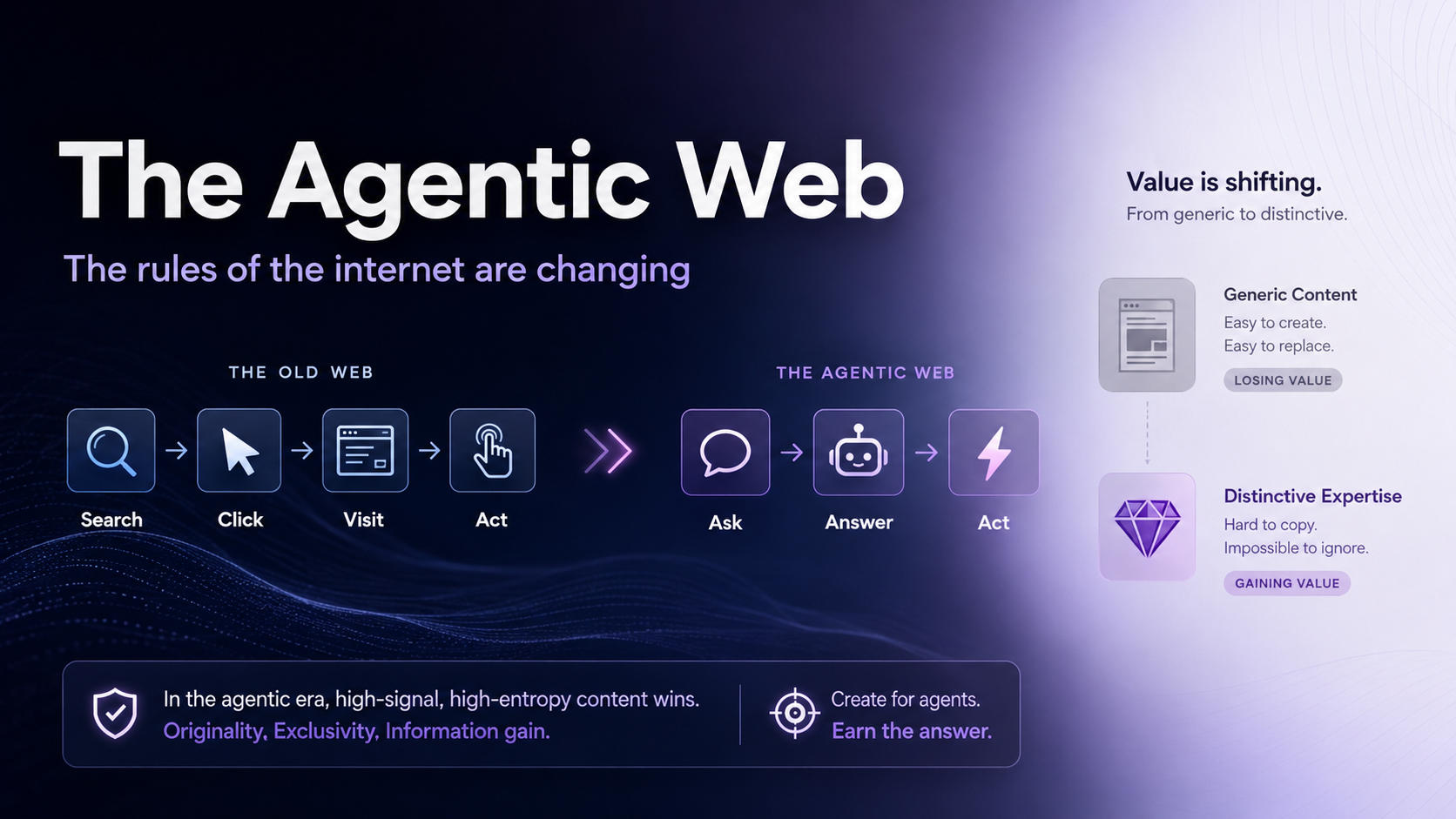
Lucky Gunasekara’s core argument was sharp. The old internet ran on Search, Click, Visit, Act. The AI era compresses that to Ask, Answer, Act. Fewer clicks, but potentially more transactions. The mechanics of how value gets created are shifting fundamentally.
The follow-on point was equally direct: in the agentic era, commodity content gets priced down by AI. Content that only you could make gets priced up. Generic summaries, interchangeable facts, low-originality publishing: all heading toward zero value. Original reporting, genuine expertise, distinctive voice: all heading the other way.
This is something we’ve been saying to clients for a while. Hearing it in this room, in these terms, confirmed it. The businesses that come out ahead won’t be the ones using AI to produce more of the same. They’ll be the ones using AI to amplify what’s genuinely distinctive about them.
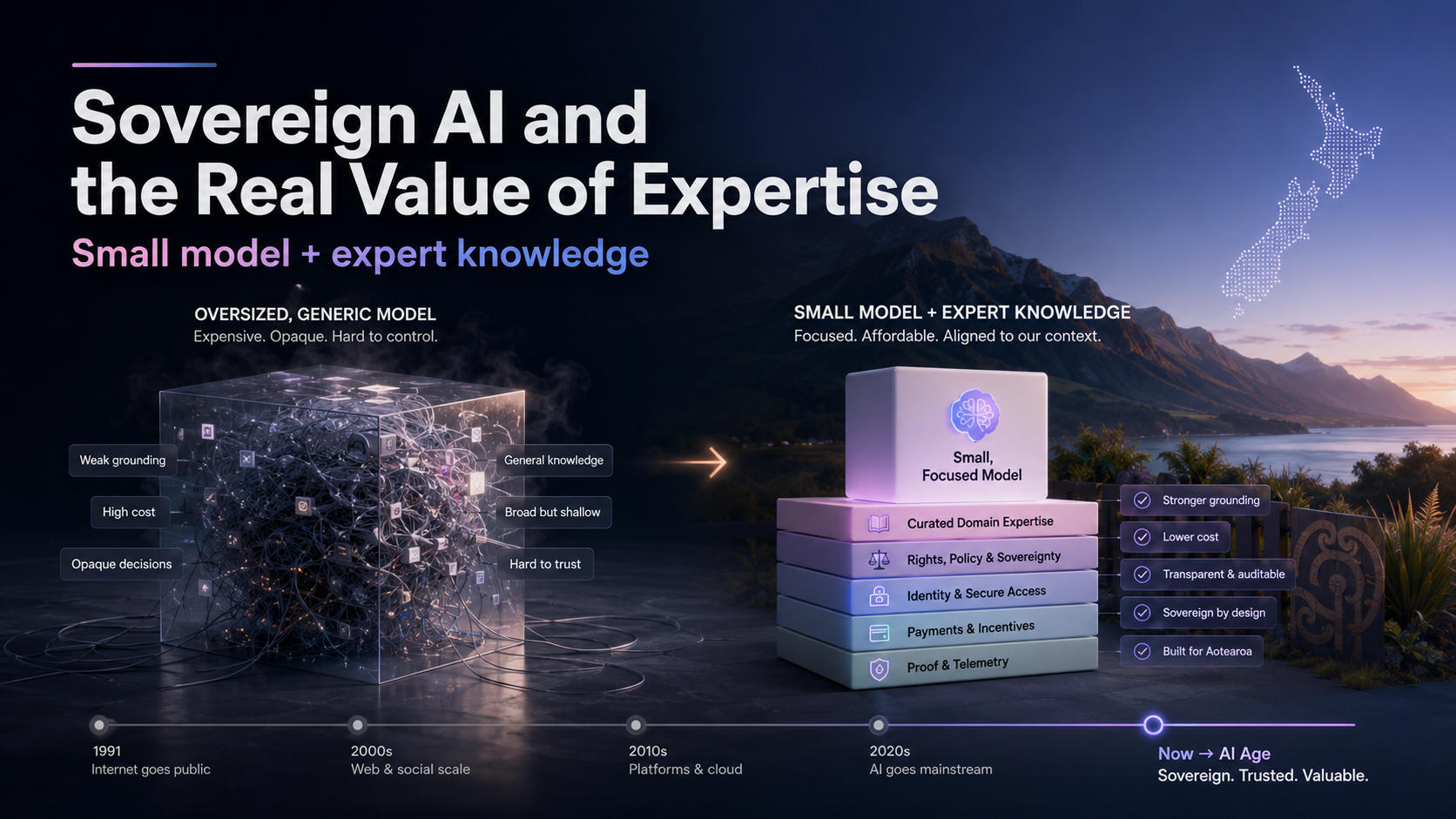
A thread running through multiple sessions was the case for “Small Model + Expert Knowledge” over brute-force frontier models. The argument: pairing a smaller, more affordable model with expertly curated, domain-specific knowledge can match or outperform the biggest models on the market at a fraction of the cost.
“The next frontier isn’t a bigger model. It’s the expertise you bring to it.”
This isn’t a new idea for us. It’s something we’re already seeing play out in practice. How precisely you combine domain expertise with AI is what determines both cost efficiency and quality of output.
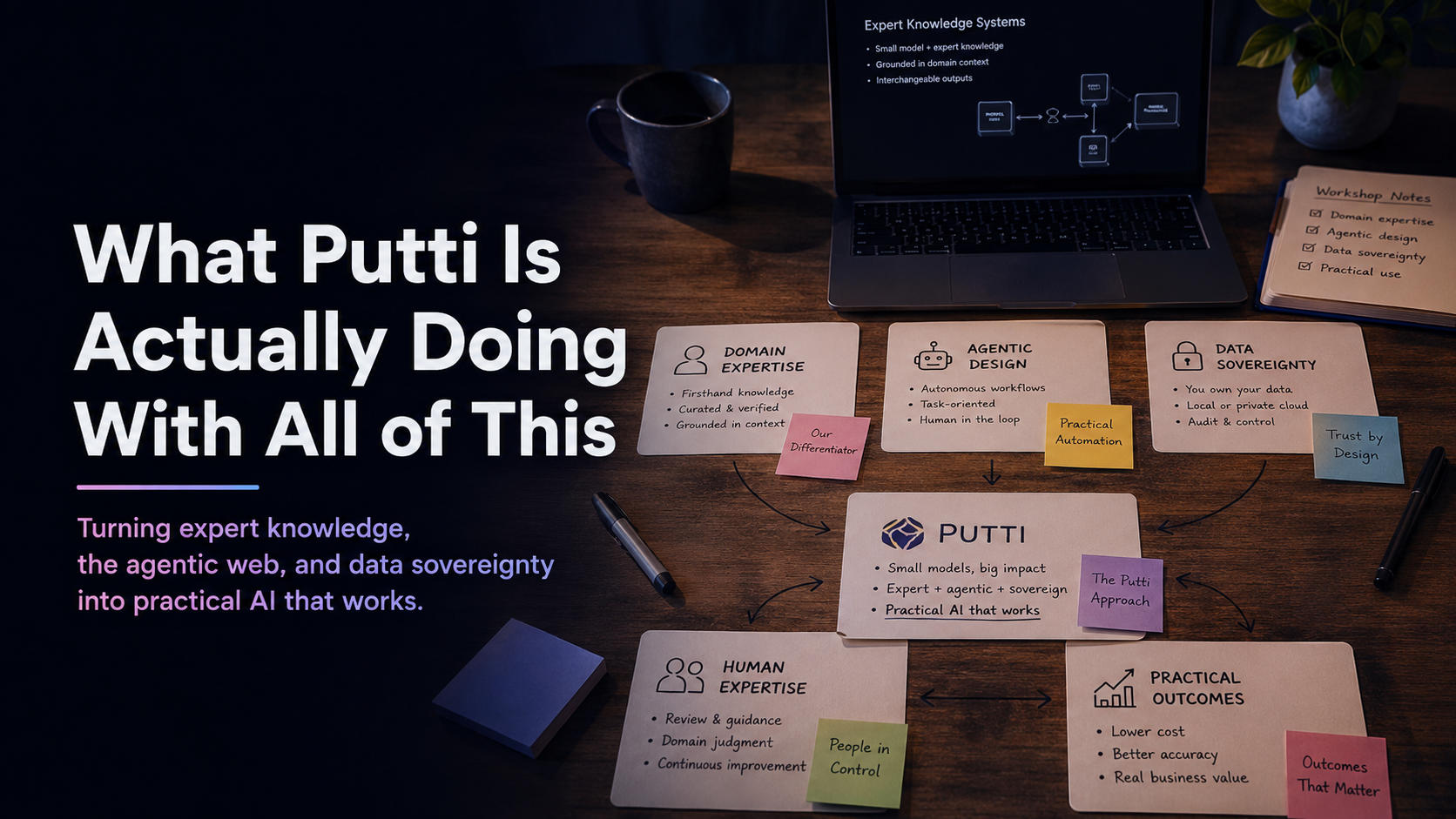
The thing we’re most wary of is walking away from a day like this with a list of interesting observations that never translate into anything real. After the event, we got specific about what we can actually put in front of clients right now.
Clarifying the “why” before the “what.” A lot of businesses feel the pressure to adopt AI without a clear picture of what problem it’s solving for them specifically. Putti’s starting point is always understanding where a client’s genuine domain expertise sits, then designing how AI connects to it. AI adoption without that grounding tends to increase costs without improving outcomes.
Giving clients a practical handle on copyright and data sovereignty. When clients use AI tools, what happens to their content and data? What risks are they actually carrying? Helping businesses understand this clearly enough to make real decisions is one of the most concrete things we can offer right now.
Designing for the agentic era, not just the search era. Content structure, data accessibility, and how a business presents its expertise online all need to be rethought with AI agents in mind. Clients who get ahead of this shift will have a meaningful advantage, and we’re building this into how we approach digital strategy work.
Making human expertise more visible, not less. “AI is pattern matching at scale. Creativity is pattern breaking at scale.” Understanding what a client knows, how they think, and what they’ve built that nobody else has, then designing how AI amplifies that rather than replaces it, is the difference between what Putti does and simply handing someone a tool. As Mo Gawdat put it, some people will become significantly smarter in the AI era. We’re here to make sure our clients are in that group.
Treating anxiety as information, not as an obstacle. New Zealand sits among the most nervous populations about AI globally. That anxiety isn’t irrational. It reflects real questions about trust, control, and what gets lost. Putti’s approach isn’t to reassure people past their concerns. It’s to take those concerns seriously, separate what’s manageable from what isn’t, and build from there.
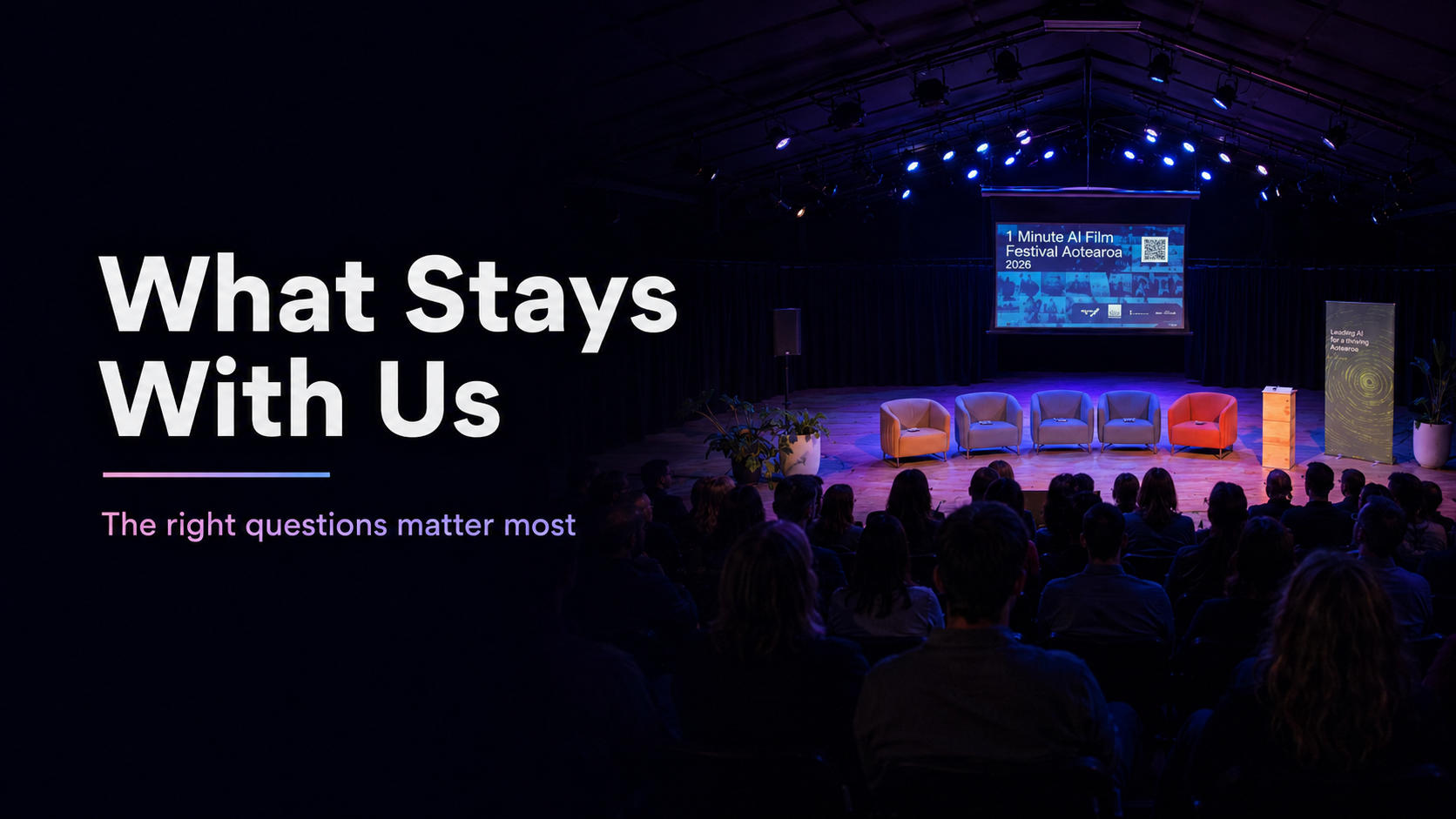
What stood out most about the day wasn’t any single session. It was the level at which people in this room were engaging with the hard questions. Not “should we use AI?” but “what are we actually giving up, who benefits, what needs protecting, and how do we stay in control of our own knowledge and culture?” That’s a more mature conversation than most, and it’s happening right here in New Zealand.
Putti’s role in this isn’t to hand clients a set of AI tools and call it done. It’s to be the partner that helps them figure out how to hold onto what makes them distinctive while moving confidently into what’s next. Nobody has all the answers, but the people in that room were asking the right questions. That’s where we want to be too.
This post is based on firsthand experience at the NZ AI and Creativity Summit 2026. If you’d like to talk through what any of this means for your business, we’d love to hear from you.